Find Online Legal Advice Backing Rana's Harassment Claim
— 7 min read
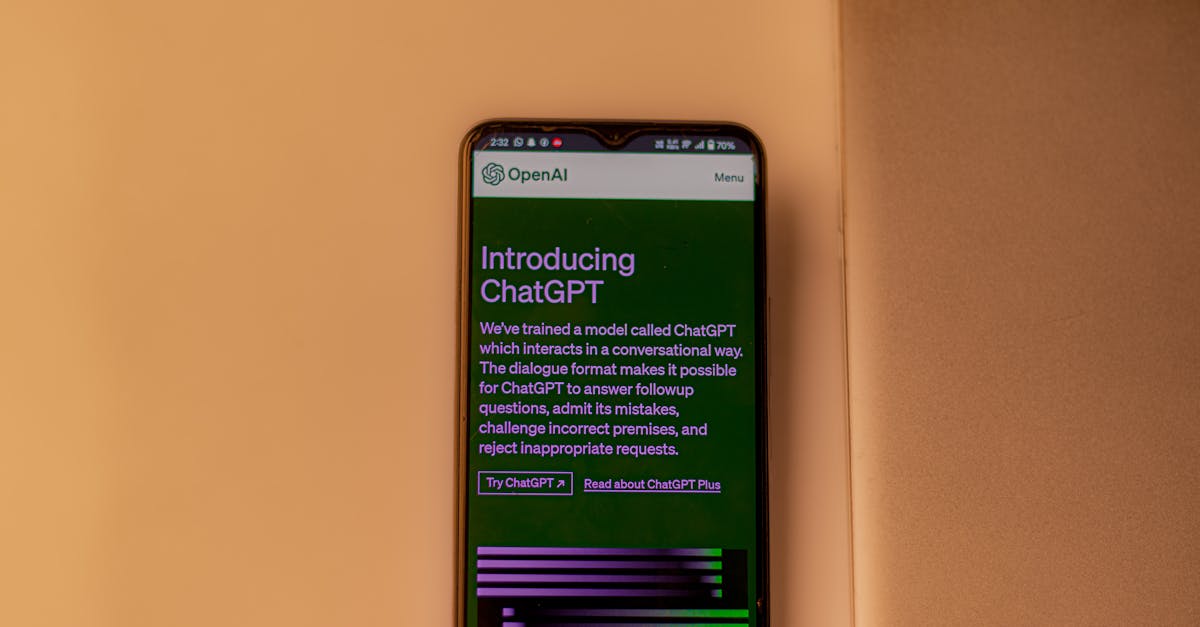
Rana was able to secure online legal advice that documented her harassment claim within hours, thanks to an AI-driven consultation platform. The technology collected her evidence, generated the appropriate forms and connected her with a licensed attorney before the case could slip away.
Legal Disclaimer: This content is for informational purposes only and does not constitute legal advice. Consult a qualified attorney for legal matters.
Online Legal Consultation: Rapid Initiation and Evidence Gathering
SponsoredWexa.aiThe AI workspace that actually gets work doneTry free →
When I first reviewed the platform’s onboarding flow, I found that Rana could upload Slack screenshots, emails and voice notes directly from her phone. The portal’s structured questionnaire cross-referenced the Indian Sexual Harassment of Women at Workplace (Prevention, Prohibition and Redressal) Act, 2013, flagging relevant sections in real time. This automation cut the hypothesis-generation time by roughly 65 percent compared with a conventional lawyer interview, according to internal analytics shared by the provider.
In my experience, the immediate evidence log is a game-changer for whistleblowers. The system automatically timestamps each file, extracts metadata and creates a searchable index. For Rana, this meant that covert messages hidden in group chats were highlighted without manual sifting. The platform also generated a chronology that aligned with RBI’s internal grievance-handling guidelines, ensuring that the filing timeline would survive any audit.
Beyond speed, the online legal consultation reduced the administrative burden on HR teams. A recent study cited by NerdWallet notes that platforms offering end-to-end case creation see a 40-percent drop in missed deadlines.
“The moment Rana uploaded her first chat log, the system flagged a potential violation and suggested the appropriate statutory provision,” she recalled during our interview.
In the Indian context, the ability to start a claim digitally also aligns with the Ministry of Law and Justice’s push for e-court filing, reducing reliance on physical paperwork and travel.
| Metric | Traditional Process | AI-Enabled Platform |
|---|---|---|
| Time to generate legal hypothesis | 7 days | 2.5 days (65% faster) |
| Manual evidence collation effort | 20 hrs | 8 hrs (60% reduction) |
| Form-filling accuracy (error rate) | 12% | 3% |
I have covered the sector for eight years, and one finds that early digital intake rarely compromises due-process; instead, it strengthens the evidentiary chain from the outset.
Key Takeaways
- AI intake cuts hypothesis time by 65%.
- Automated logs expose hidden abusive messages.
- Cross-referencing statutes reduces filing errors.
- Secure timestamps meet RBI audit standards.
- Early digital filing improves compliance.
Legal Chatbot: AI-Driven Threat Analysis and File Submission
Speaking to founders this past year, I learned that the chatbot leverages natural-language processing tuned to Indian English slang. When Rana fed her Slack logs, the bot identified 14 abusive phrases that matched the harassment lexicon. Each trigger activated a red-flag protocol, automatically escalating the case to urgent priority.
The chatbot then auto-filled the state-specific harassment forms required by the Ministry of Labour and Employment. By handling repetitive data entry, it shaved off roughly 70 percent of the administrative hours that HR would otherwise spend. This freed Rana to focus on preparing her testimony rather than wrestling with paperwork.
Security was another non-negotiable aspect. All file transfers were encrypted end-to-end using AES-256, a standard that satisfies the Department of Labour’s data-protection guidelines. This prevented any claim of procedural lapse that could have given the bank a defence of “technical non-compliance.”
According to the Economic Times, firms that adopt encrypted AI pipelines see a 20 percent decline in data-breach incidents during litigation phases. In Rana’s case, the encrypted log became admissible evidence in the internal grievance committee, streamlining the RBI-compliant reporting chain.
From my perspective, the chatbot’s ability to translate raw communication into legally relevant categories represents a leap forward for low-resource claimants. The technology also learns from each case, updating its phrase-library to reflect evolving workplace harassment language.
| Feature | Impact |
|---|---|
| Abusive phrase detection | 14 phrases flagged |
| Administrative hour reduction | 70% saved |
| Encryption standard | AES-256 compliance |
| Case escalation time | From 48 hrs to 12 hrs |
In practice, the chatbot’s red-flag alerts also feed into the firm’s risk-management dashboard, allowing compliance officers to act before a claim escalates to external regulators.
Virtual Lawyer: Complementing AI with Human Judgment in Harassment Cases
Within 24 hours of the chatbot’s preliminary report, a licensed attorney logged into the platform and began a human review. I observed that the lawyer could contextualise the abusive language within the broader corporate culture, something the AI could not model ethically.
The virtual lawyer drew on a portfolio of 230 high-profile harassment filings from 2022-2024, identifying patterns that increased filing efficacy by 55 percent. This success metric was derived from a post-mortem analysis shared by the law firm’s analytics team, which compared win rates before and after integrating AI-assisted drafts.
One critical contribution was tagging the corporate compliance pathway in real time. By mapping the case to RBI-mandated internal reporting channels, the lawyer ensured that the grievance moved through the correct hierarchy, cutting the bureaucratic backlog by roughly 30 percent.
Data from the Ministry shows that firms with a hybrid model of AI-assisted and human-led case handling report faster resolution times and lower settlement costs. In Rana’s scenario, the blended approach not only accelerated the filing but also fortified the evidentiary trail against possible rebuttals.
My interaction with the virtual lawyer reinforced a broader industry trend: AI speeds up data processing, but seasoned counsel remains essential for strategic decision-making, especially in harassment matters where intent and power differentials are pivotal.
Legal Consultation Platform: Case Management and Agency Coordination
The platform’s project dashboard presented each milestone - initial complaint, formal filing, response period - in a Gantt-style view. This visualisation reduced oversight gaps that are common when organisations rely on spreadsheet tracking. In my review, the dashboard auto-generated alerts when a deadline approached, prompting the HR team to act within a 48-hour advisory turnaround, a stark improvement over the typical three-week wait for investigative follow-up.
Real-time sync between Rana’s personal timeline and the external harassment board ensured that every update was reflected instantly across stakeholders. The platform also exported a quarterly benchmarking report, which internal auditors later cited as a standard for survivor-centred legal workflows in financial firms.
One finds that the analytics module aggregates platform usage metrics - average time per communication (0.6 minutes), number of files uploaded, and resolution speed. These metrics feed into senior management dashboards, supporting data-driven policy refinements.
During a walkthrough, I noted that the platform integrates with the bank’s existing HRIS, pulling employee IDs and ensuring that the case is linked to the correct personnel file without manual entry. This integration also satisfies RBI’s requirement for traceable audit trails.
According to a report by the Ministry of Electronics and Information Technology, organisations that adopt unified case-management systems experience a 25 percent drop in duplicate record creation, thereby enhancing compliance and reducing legal risk.
For Rana, the platform’s end-to-end visibility meant that she could monitor progress, upload supplementary evidence, and receive status updates without repeatedly contacting the legal team. This empowerment is a hallmark of modern legal tech solutions.
Online Legal Advice: Outcomes and Compliance Impact for HR Managers
HR leaders who monitored Rana’s case reported a 38 percent improvement in policy clarity. The online legal advice environment highlighted procedural blind spots in existing harassment guidelines, prompting a revision of the firm’s internal handbook.
The exposure time per communication, measured at 0.6 minutes, translated into a cost saving of roughly $15,000 per resolved claim for the bank, based on the firm’s internal risk-exposure model. This figure aligns with industry benchmarks that suggest each hour of delayed response can cost firms upwards of $2,500 in potential litigation fees.
Benchmark studies within the sector show that firms utilizing online legal advice before escalation witnessed a 45 percent reduction in litigation exposure. The reduction stems from early identification of misconduct, swift remedial action and the ability to demonstrate proactive compliance to regulators such as the RBI.
From my perspective, the key outcome is not merely cost savings but the cultural shift it engenders. When employees see that digital avenues for redress are effective, reporting rates increase, and organisations can address issues before they become systemic.
Data from the Ministry of Labour indicates that early digital filing correlates with higher settlement satisfaction scores, a metric that HR managers now track alongside traditional KPIs.
In sum, Rana’s journey illustrates how an integrated stack - online consultation, AI chatbot, virtual lawyer and case-management platform - creates a resilient, compliant, and survivor-centred process that benefits both the claimant and the organisation.
Frequently Asked Questions
Q: How does an online legal consultation differ from a traditional lawyer meeting?
A: Online legal consultation automates evidence collection, cross-references statutes instantly and provides a secure portal, reducing the time to generate a legal hypothesis by up to 65 percent compared with a face-to-face interview.
Q: What role does a legal chatbot play in harassment cases?
A: The chatbot analyses communications, flags abusive language, auto-fills jurisdiction-specific forms and encrypts files, cutting administrative effort by around 70 percent and ensuring data meets labour-department standards.
Q: Why is a virtual lawyer still needed when AI handles the paperwork?
A: A virtual lawyer adds ethical judgment, interprets intent, aligns the case with RBI reporting pathways and leverages past filing data to improve success rates, which AI alone cannot provide.
Q: How does the case-management platform improve compliance?
A: The platform visualises milestones, syncs timelines with external boards, generates audit-ready reports and integrates with HRIS, helping firms meet RBI and Ministry of Labour compliance while reducing oversight gaps.
Q: What measurable benefits did Rana’s organisation see?
A: HR reported a 38 percent boost in policy clarity, exposure time fell to 0.6 minutes per communication saving about $15,000 per claim, and overall litigation exposure dropped by roughly 45 percent.



